

The Creative Perversion of Creative Advertisement
and what happens when censorship takes foothold in it.

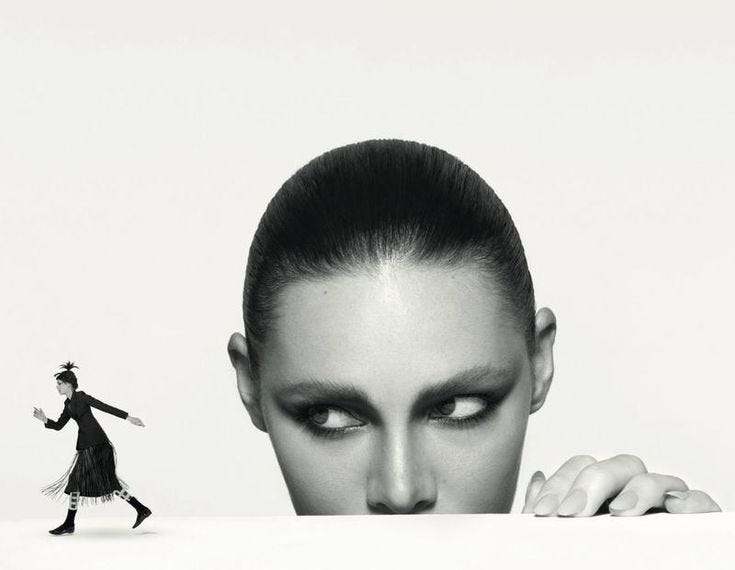
Creative Advertisement is a misunderstood form of art, an unappreciated effort: creating entire identities and aspirational lifestyles from a service, event, or product. Thinking outside of the box becomes a game of corralling when politics are at play. The art of creative advertisement is disturbed by the language of censorship. Surveilling the day to day language of consumers makes it difficult for advertisers to pitch and promote products to a general public because consumer conversation becomes codified. Even as a visual language, it becomes dogged with dog whistles, weaving political motivations into brand messaging for the sake of making a profit. These disturbances in communication leaves consumers either isolated or accepted by a brand’s newfound identity. Trying to control this freedom of expression only distorts messaging: all in ways politics can reliably find itself enacting.
When trying to discuss what consumers may want or even like, internet trends and movements are used as an attempt to connect with audiences. However, this surveillance is at times incapable of penetrating this. Surveilled day to day language of consumers makes it difficult for advertisers to pitch and promote products because consumer conversation becomes codified. In an age where digital platforms are heavily influenced by political motivations, free speech becomes somewhat of an illusion. Repression hinders users from expressing opinions that may not be in favor of undisclosed agendas. It’s akin to Foucalt’s observations on the censorship of sex in The History of Sexuality. From the 17th century and onward, underneath religious influence and Victorian society, sex became a topic that was only referenced or made into innuendos. This was put into practice through confession, a time that requires vulnerability and explicit admittance of unholy acts. In an effort to allude, confessional language becomes codified; sex or sexual acts are referred to but sex itself is never explicitly stated. Over time, sex becomes referential but never spoken of.
Comparable efforts to make political conversations a taboo are codified in the same manner: Influencers being shadow banned or removed from platforms for speaking up about brands that have certain political affiliations. This is not to pity, dismiss, or reduce the role influencers play in social media’s enjoyment of “the highlight reel”, only to point out their role in aspirational marketing and creative advertising. Each page is an advertisement of a lifestyle with all of the products needed to achieve it linked in their bio. Each brand deal requires several rounds of sharing concepts, adjusting per feedback, and repeating this rinse and wash cycle until perfection is achieved. Even though they’re a facet of advertising, these influencers are still people. People with morals, carrying around in silence their own code of ethics, possessive of varying philosophies or, if applicable, religious standing.
Political issues gaining momentum on social platforms is where this becomes an issue. Influencers have the opportunity to bring awareness or speak up on certain political conflicts to their following. Whether this is done through thoughtful commentary, renditions of cultural moments relevant to certain communities, or any varied form of media that can be consumed in a 1080 by 1920 pixelated frame, the message remains despite the mode.
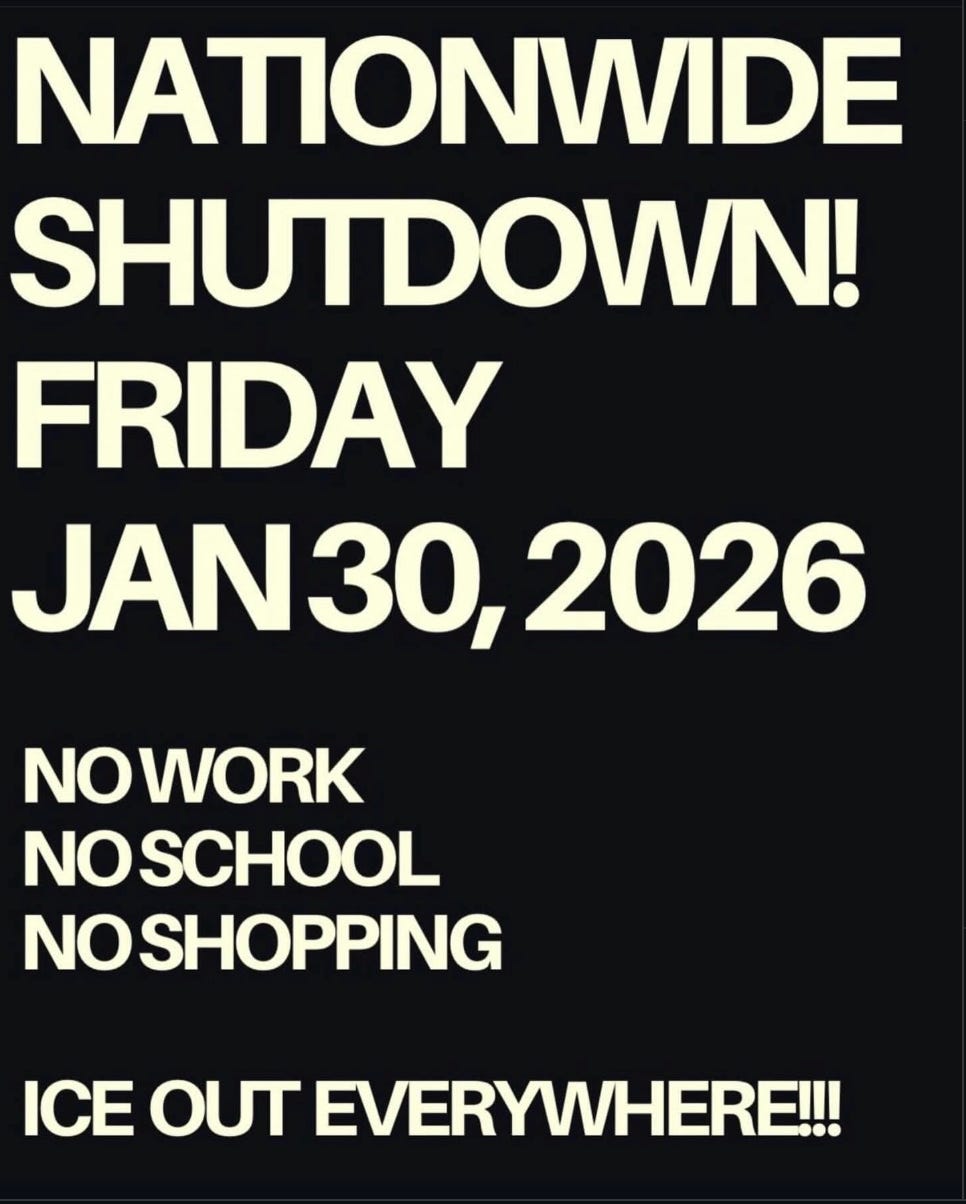
Conflicting with this desire to promote or advertise political and cultural movements online, is the rising trend of political clauses in brand deals. Creative advertisement is compromised by censorship especially when it’s legally bound. In Cancelled: Morality Clauses in an Influencer Era, Annamarie White Carty writes about the procedures brands should follow to ensure there are guardrails in the event an influencer conducts immoral conduct online and elicits an unfavorable response from this. This kind of behavior is legally inclusive of sharing opinions since this is a dissection of free speech. An example of this would be the “ICE out” digital activism trend that took place back this past January. Several influencers decided to put a pause to posting any marketing material, whether it was approved or not to go live that day. For some, this could be an issue, especially if they took to their platforms to actually speak out on it, as a majority of brands have this political clause listed in these influencer agreements. A reasonable hypothetical to entertain is that some of them could have faced some behind the scenes repercussions for participating.
As political tensions rise, brands may be more inclined to work with influencers that are not vocal about any ongoing political issues or conflicts. Being aware of how certain influencer’s silence may be interpreted by their audience, there is a choice to be made: one that respects ethics or one that respects economics. It’s a business, and also a politically minded decision to censor any kind of affiliation with someone that’s willing to be vocal when it silently doesn’t align with company values.
These financially minded decisions ultimately weave political motivations into creative advertisement. Brand messaging becomes a form of propaganda for the sake of making a profit. The recent rise of Generative AI in advertisement has amplified this within the field. It’s also not any different from the art movements of the past born out of political motivation. In Italy, around the 1920’s after World War I, the push for Novecento Italiano was a means to promote fascism as progress. America’s proliferate use of Abstract Expressionism was in a similar vein; Anti-soviet sentiments during the Cold War made way for the CIA to push this art movement into the limelight, making artists like Jackson Pollock and Mark Rothko its poster children. Granted, even if this wasn’t for profit, it was censorship advertised as art.
This is no different from the push that’s in favor of using Generative AI. It has slowly become synonymous with a value of profit over labour. A lack of artistic integrity that only grows apparent with each prompt. The journey and destination of creation are democratized for the sake of efficiency. This especially becomes political in a world, moreover country, that has declining media literacy rates: having slowly developed an audience that values literalism over nuance in art. Generative AI aligns itself with this: a form that pays dust to art history, treating art as mass produced content to push onto people rather than treating it as a visual story, and catering to a demographic that values owning art as a status symbol, showcasing purchasing power, but not necessarily for the history that comes with it. This shifts the value of contemporary art, as it becomes more and more synonymous with people who possess curiosity, are willing to educate themselves outside of the classroom, and have the luxury to own a work of art in its entirety through possessing knowledge of the work and its history.
When business benefits from censorship and the removal of humanity’s flaw of possessing morals, art is about capital, not creativity. Fashion houses using AI in their advertisements reflects this. In recent years, maison’s such as Gucci and Valentino, have begun experimenting with AI usage. Alessandro Michele’s Valentino employed AI “artists” to create advertising for their social media pages. Denma’s Gucci has shared Generative AI photoshoots to help promote their upcoming Fall/Winter 2027 collection. In comparison, there’s Daniel Rosenberry’s Schiaparelli and Mathieu Blazy’s Chanel: two houses that have taken to showcasing their craftsmanship, and the intensive labour that goes into beading, embroidery, and fabric arts. These designers choosing to retrace the steps of their craft becomes its own moral currency. Showcasing the process is creative advertisement in itself.
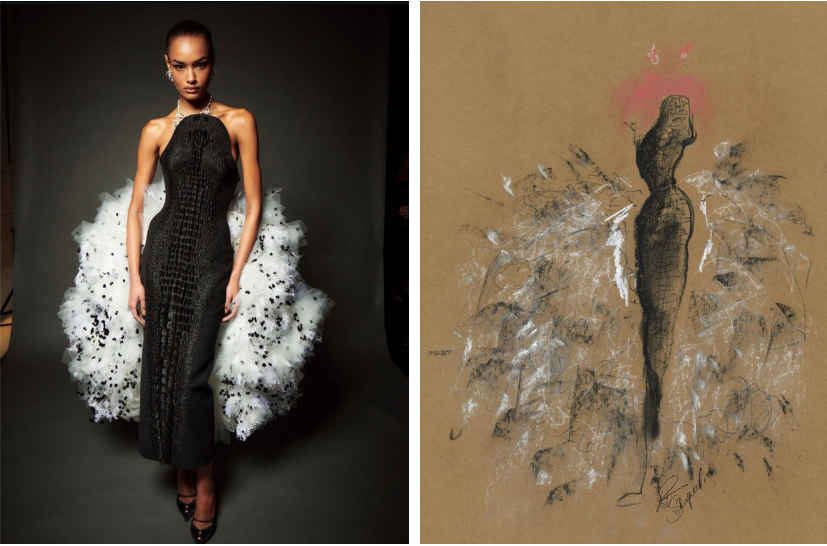
The growing division in creative advertisement of these houses, does not solely just showcase the creative direction they’re taking. Their advertising choices put their target audience’s philosophies on full display. The Gucci customer is not concerned with craft, only status, whilst the Schiaparelli customer concerns themselves with the labor and story behind the product. Both are emblematic of certain kinds of wealth, but are also telling of differing morals and political philosophies.
Adverts from these brands leave their consumer base either isolated or accepted by their newfound identity. What’s being promoted is not the product, but rather a brand’s political identity. Which, under the repressive nature of censorship, can be to the benefit or harm of the company.
Orabella, a fragrance line created by model Bella Hadid, is exemplary of this. She has heavily promoted this product on her page and, from what it appears to be online, is heavily involved in the business backend. There is nothing wrong with launching a product using your name. This only becomes a bit of a PR issue when branding relies too heavily on an individual’s image to help maintain sales. In 2024, Scandinavian influencer Matilda Djerf, owner of Djerf Avenue, was cancelled because of her business practices. There were reportedly several instances of workplace misconduct such as bullying employees, as well as the irony of being a company that stood for diversity but also bullied their plus size models when shooting e-com (amongst other things). In Hadid’s situation, her issue is in relation to her personal politics. She has been outspoken about ongoing political issues for the past few years, having lost brand deals, modeling opportunities, and ambassadorships for being pro Palestine. However, recently in an instagram post, Hadid has shown support for several liberation movements, including a push for a free Sudan. This is in complete conflict with her brand as she has extended retail of her fragrance with ULTA , going as far as to make an appearance at the launch event, in Dubai. Dubai, a place where all the gold it possesses comes from Sudan and has played a large role in the ongoing conflict there. Since having made that post, she has also removed her free Sudan comment as well.
Censorship has and continues to threaten any kind of creativity, even when it’s advertisement. The art of creative advertisement struggles to be appreciated as consumer language is increasingly codified. If it doesn’t, entire consumer bases are removed entirely from the internet for not being cautious enough with their freedom of speech. Political motivations woven into the very fabric of brand messaging, contorts it into a varied form of propaganda for the sake of making a profit. Inadvertently, after all is said and done, the consumers that are left are either isolated or accepted by a brand’s newfound identity. The choices made in creative advertisements may reflect ongoing politics and power structures: but there is still power with the audience, as it is up to them to give it value. Art is political, politics is power, and power is an art.